
Quick answer
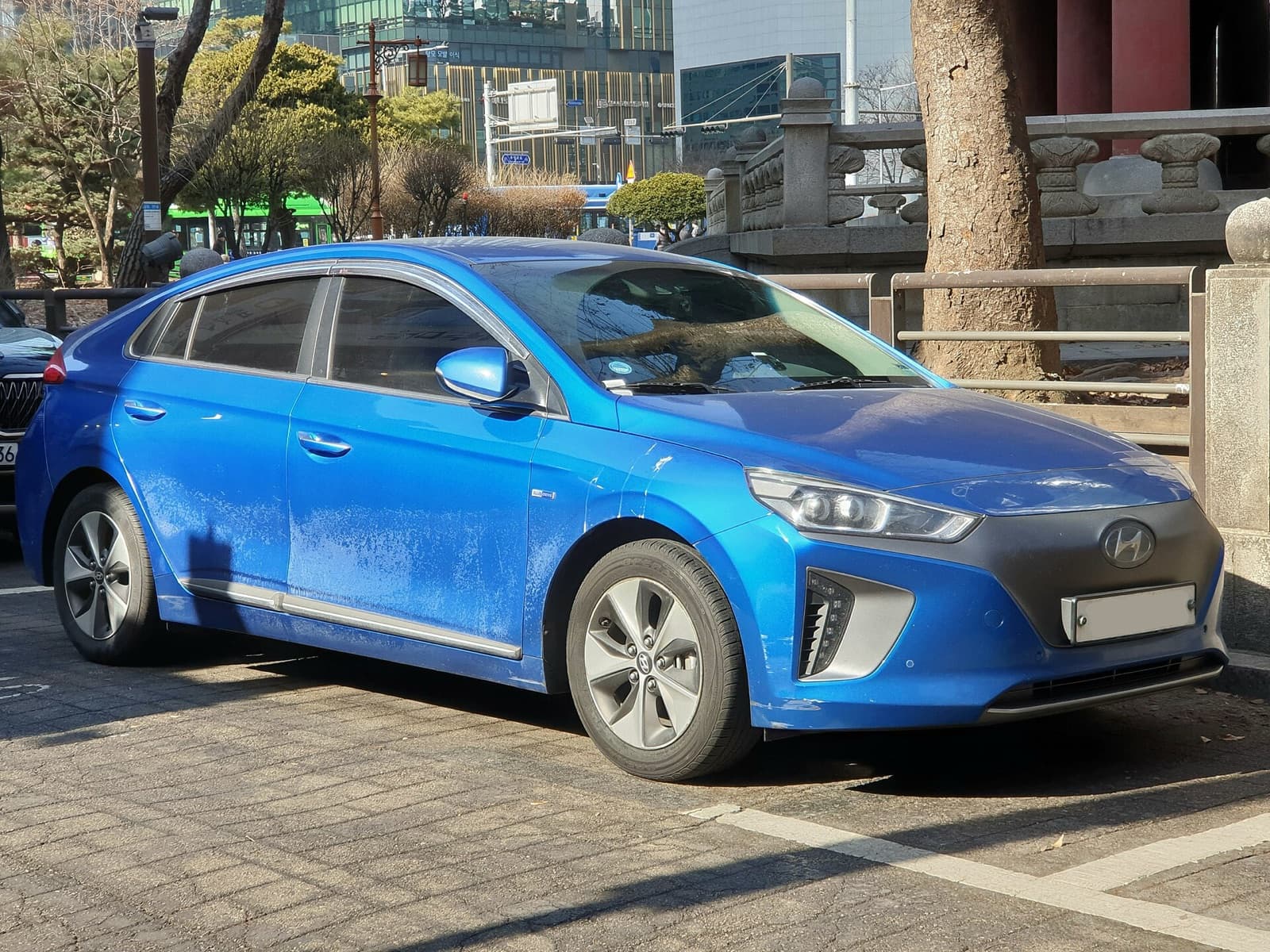
Hyundai Ioniq Electric at a glance
| Body type | Liftback hatchback |
|---|---|
| Years | 2016-2022 |
| Battery (usable) | Usable ~28 kWh (30.5 total) or ~38.3 kWh (40.4 total, 2019 facelift) |
| WLTP range (new) | Around 193 miles for the 38.3 kWh car (the earlier 28 kWh predates WLTP) |
| Real-world range | Roughly 115-140 miles (28 kWh) or 150-200 miles (38.3 kWh), unusually efficient |
| Battery warranty | 8 years / 125,000 miles to 70% capacity (5 years / 100,000 miles if used as a taxi or private hire) |
| Battery cooling | Forced-air cooling (28 kWh); liquid cooling on the 38.3 kWh facelift |
Figures are typical across the model's life and vary by year and trim, treat them as a guide, not a guarantee for a specific car.
How the Ioniq Electric's battery ages
One of the gentlest EVs on its battery: exceptional efficiency and modest charging rates keep cell stress low, and the small buffer means the capacity you see is close to the truth. Battery recalls in 2021 and 2026 mean some cars carry newer replacement packs, so recall completion matters as much as age.
Battery cooling is a big part of the story: this car uses forced-air cooling (28 kwh); liquid cooling on the 38.3 kwh facelift. Cars that have spent their life on rapid chargers, been left sitting at 100%, or lived somewhere hot tend to lose capacity faster, which is why two identical Ioniq Electrics on the same mileage can be worth different amounts. Read more in our guide to what's normal for EV battery degradation.
What to watch out for on a used Hyundai Ioniq Electric
- Two batteries (28 kWh to 2019, 38.3 kWh after) and adverts often quote the old flattering NEDC range figures
- A June 2026 battery recall (cell voltage deviation) is outstanding on many cars, check by registration before buying
- The newer 38.3 kWh car rapid-charges slower than the 28 kWh original (about 44 kW vs 69 kW peak)
- Taxi or private-hire history cuts the battery warranty to 5 years / 100,000 miles, check how it was used, not just the mileage
Hyundai Ioniq Electric battery replacement cost
Hyundai publishes no UK list price for a replacement pack. One UK battery specialist indicatively quotes roughly £7,000 to £8,000 for a full Ioniq Electric battery, and the 2021 battery recall means a slice of the facelift cars already carry newer replacement packs.
In practice very few used EVs ever need a whole new pack: outright failure is rare, a battery that drops below its capacity threshold inside the warranty period is the manufacturer's problem rather than yours, and gradual range loss is the normal story. Before pricing up a replacement, check the car's estimated battery health, most “tired” EVs turn out to be perfectly usable cars at the right price.
What the Used EV Check shows for a Hyundai Ioniq Electric
Enter the registration and the Used EV Check returns, for that specific Ioniq Electric: its expected real-world range now versus when new, an estimated degradation figure, a battery-health grade where a manufacturer test record exists, and the battery warranty remaining in miles and months. It also pulls the full MOT and mileage history so you can spot clocking or a car that has covered far more motorway miles than the advert suggests.
It's the fastest way to tell a good Hyundai Ioniq Electric from a tired one before you drive out to view it. For the wider process, see our complete used-EV buyer's guide and how to check an EV's battery health.
Range and battery-health figures are estimates modelled from real-world data and are shown for the specific vehicle in the Used EV Check. Range data is powered by ClearWatt. A battery-health grade is shown where a manufacturer test record exists, it is a comparative grade, not a measured state-of-health percentage.
Check a used Hyundai Ioniq Electric before you buy
Enter a registration to see this Ioniq Electric's battery health, real-world range now vs when new and remaining battery warranty, an instant report.